
Cyber Risk Forecasts for Retail & Commercial Banks
Resilience Starts Before The Crisis
For banks, cyber resilience is not determined during an incident—it is determined by the decisions made beforehand.
Financial institutions that consistently outperform during periods of disruption tend to identify changing threats sooner, align resources more effectively, and act before risks materialize into losses, regulatory findings, or operational disruption.
The Retail & Commercial Banking Cyber Risk Forecast provides a forward-looking view of emerging threats, fraud trends, industry attack patterns, geopolitical influences, business impacts, and executive actions designed specifically for banking leadership.
The institutions most likely to thrive through the next wave of cyber threats are those that see the change coming—and act before everyone else does.
$145
Name
Company Name
We will not send spam
You'll be taken to the payment screen after subscribing here.
Retail & Commercial Banks Cyber Risk Forecast
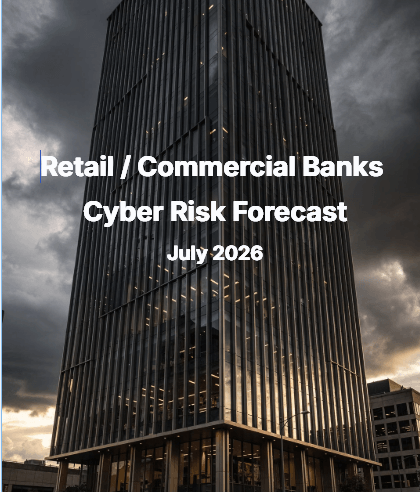
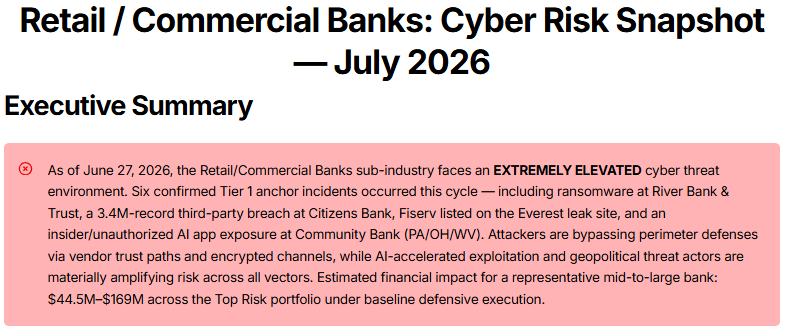
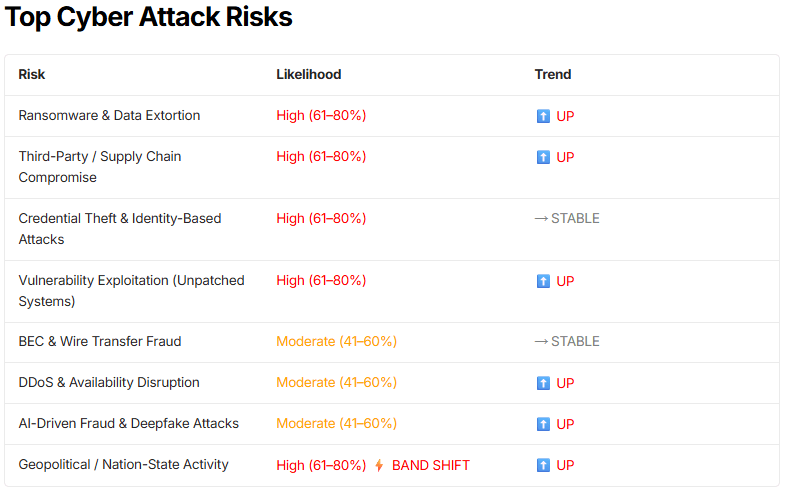
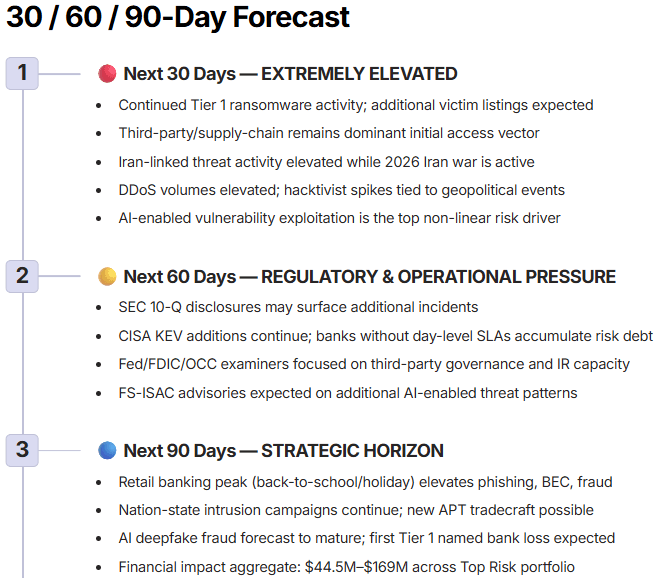
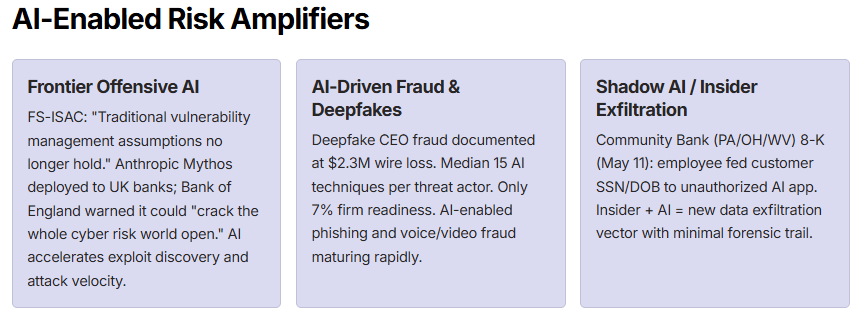
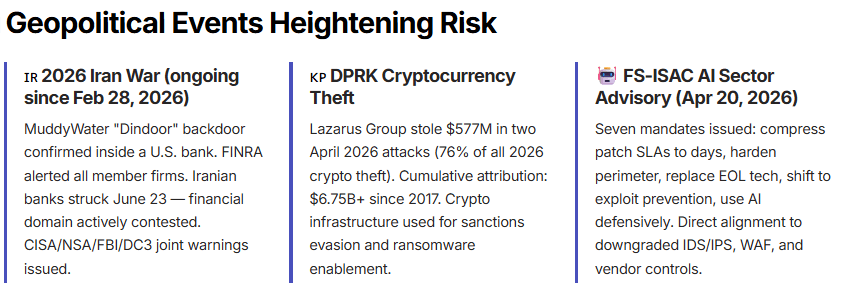
Understand how fraud, account compromise, and operational disruption are evolving— and how likely your organization is to be impacted
Retail and commercial banks operate in an environment where cyber risk is inseparable from financial risk. Attackers target customer accounts, payment systems, and internal processes not just to disrupt operations, but to move money directly.
The result is a threat environment defined by fraud at scale. Social engineering, credential theft, and increasingly automated attack methods are being used to bypass controls that were designed for a different pace of adversary. The speed at which attacks can propagate across customer populations means that small gaps in authentication or monitoring can translate into measurable financial loss within hours.
This forecast focuses on how these attack patterns are evolving across the sector. It establishes an industry baseline model and then customizes that based on three critical factors that determine the individual business risk: exposure, how attractive the data is, and maturity of security practices.
Answer 3 questions, and as soon as you select your profile you have cyber risk quantified for your business.
Your Business-Level Risk Forecast
Overview of the top risks
Priority actions for CISOs on strategy and mitigations for the next 90 days
Estimated (typical) financial impact for each risk category
Overview of geopolitical events driving risk and how it impacts your industry
A 30-60-90 day outlook of how attacks are anticipated to shift
Your industry risk quantified: each attach scenario likelihood and corresponding financial impact estimate (industry 'typical' profile)
Your business-level risk quantified: customized profiles that quantify your organization's risk based on the three primary characteristics that determine your likelihood of being targeted for attack, the success factor, and reasonably expected financial impact.
Control maturity matrix so you see how you compare to the industry baseline
For bank leadership, the question is no longer whether attacks occur, but how they translate into loss, customer impact, and regulatory exposure. This forecast allows you to see how your risk profile is shifting month to month and whether current controls are meaningfully reducing expected loss.
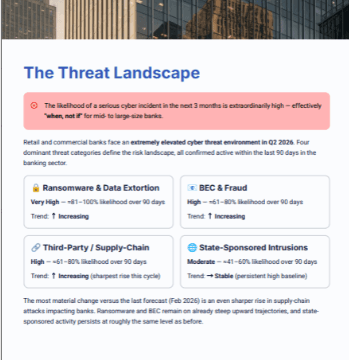
Take a peek inside a sample report
This sample report will give you the flow and components of a cyber risk forecast. Your sector report can vary slightly.

Get in touch
Charlene Deaver-Vazquez
Charlene@CyberRiskModels.com
(301) 346-3752
Have a question?
Let's talk about it.