
Charlene Deaver-Vazquez
About Me
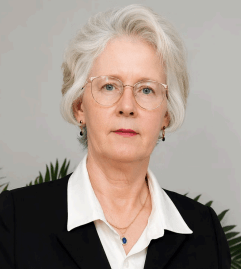
My name is Charlene Deaver-Vazquez. I specialize in cyber risk analysis, quantification, and forecasting. For several years, I supported the U.S. Nuclear Regulatory Commission in analyzing cyber risk and helping leaders make decisions under uncertainty. Today, I apply that same analytical approach across healthcare, government, and financial services, producing industry-specific cyber risk forecasts that help executives understand what is most likely to happen, when it may occur, and what the consequences could mean for their organizations.
This type of risk analysis, risk quantification and forecasting, uses the math of probability to estimate the likelihood, timing, and financial impact of cyber attacks. My work helps senior leaders make better decisions. Throughout my career, I have built and refined models that translate complex attack patterns, threat behavior, and control effectiveness into clear, measurable business risk.
I specialize in making cyber risk understandable, measurable, and actionable for business leaders and providing actionable recommendations that measurably reduce risk.
In most organizations, cyber risk is still described in vague terms such as “high,” “medium,” or “low.” That approach falls short at the executive level. It does not support sound investment decisions or align cybersecurity with business strategy. My work has focused on closing that gap.
Risk Modeling
My experience developing risk models spans the full lifecycle of cyber risk analysis—from vulnerability analysis to scenario analysis to estimating financial impact to advanced mathematical models that provide deeper insights into behaviors and future trends.
I design risk models that:
Break down cyber threats into actionable scenarios
Estimate frequency and impact using probabilistic techniques
Incorporate real-world data and observed incident trends
Evaluate the effectiveness of specific security controls
Produce outputs that directly support investment, prioritization, and strategy decisions
These models allow CISOs and executive teams to understand not just where risk exists, but what that risk means in financial and operational terms, and what actions will reduce it most effectively.
At the core of my work is scenario-based modeling, where each risk is expressed as a plausible business event with defined causes, pathways, and outcomes. This approach ensures that risk analysis remains grounded in how attacks actually occur, rather than abstract scoring systems.
My models use the math of probability to go beyond qualitative into quantitative analytics. This is the same math used in nuclear, space, safety, finance, health and other industries to answer some of our most complex questions.
Author and Speaker
In addition to risk analysis, I am an author and speaker focused on advancing how organizations think about cyber risk.
My writing and presentations center on:
Moving beyond qualitative risk assessments
Applying quantitative methods in practical, scalable ways
Helping CISOs communicate risk effectively to boards and executives
Translating cybersecurity into financial and strategic language
I have developed educational content, frameworks, and tools designed to make cyber risk quantification accessible and actionable, especially for organizations that do not have large internal analytics teams.
What Drives My Work
The cybersecurity industry has matured significantly, but the way we communicate risk has not kept pace.
Executives are no longer asking whether cyber risk exists—they are asking:
How much could this cost us?
What should we invest in next?
How do we prioritize competing risks?
Those are quantitative questions, and they require quantitative answers.
My work is focused on providing those answers—through models, analysis, and structured approaches that allow organizations to move from uncertainty to informed decision-making.
Today
Today, I focus on building scalable cyber risk forecasting models and delivering insights that help organizations understand their unique risk profile based on exposure, attractiveness, and security maturity.
The goal is simple: to give CISOs and business leaders a clear, defensible view of cyber risk—and the confidence to act on it.
Charlene Deaver-Vazquez
Explore Charlene’s published work,
research archive, and media appearances → [View Archive]
CyberRiskModels.com
326 Howard Street, Mount Airy, NC